A Slow Look at a Rainy Neighbourhood Walk
A rainy neighbourhood walk can reveal how leaves, kerbs and drains handle water, helping you read a familiar route without turning it into a field survey.
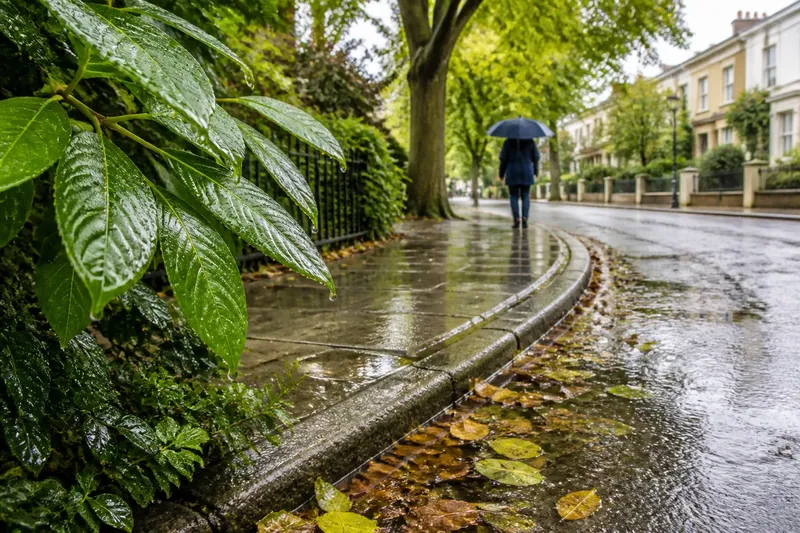
The common mistake on a rainy neighbourhood walk is to keep the usual pace and look only at the pavement; the cost is missing how water changes familiar corners. Rain makes leaf surfaces shine, traces the shape of a kerb and gives drains a voice. A route you already know is enough to see those changes.
Choose a known route
Pick a short stretch with contrasting surfaces: a pavement beside front gardens, a tree-lined lane or a path through a small square. Knowing where the ground dips and where a drain sits helps you spot what the shower has changed.
Go out when the conditions suit a comfortable walk. In heavy rain, traffic can drown out quieter sounds; in gusts, an umbrella can obscure your view. If the route is slick, flooded or exposed, shorten it or wait for another day. A puddle is not worth a detour into the road.
Notice wet leaves
Water changes a leaf’s appearance before it changes its shape. A dry surface may look matte, while a wet one darkens, shines or holds beads along its edge. Light and viewing angle matter, so a leaf can look different as you pass it.
Compare shapes rather than trying to name every plant. Broad leaves may hold a shallow film; narrow or angled ones can shed drops towards a tip. These patterns describe the moment, not the plant’s identity: age, dust and damage also affect what you see.
Look at how leaves are arranged. A cluster can shelter the growth below, while an exposed branch receives more rain than one under an eave. There is little benefit in leaning into a hedge for a closer view; the arrangement is often clearer from the path.
Trace water’s route
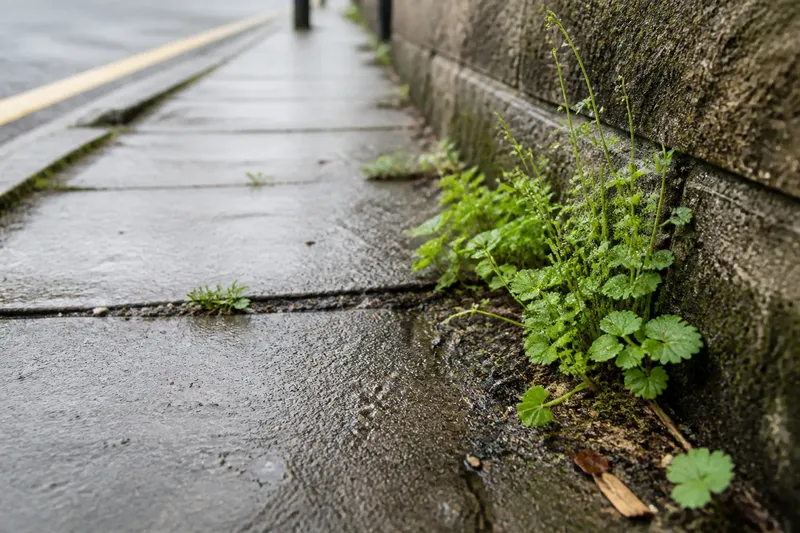
A puddle’s outline can spread into a hollow, stop at a raised kerb or break around a crack in the paving. Watch from firm ground and notice where small leaves or grit gather. Those details show how the street’s slight slopes and gaps direct water.
Keep clear of pools that cover uneven paving or carry road runoff. If a puddle obscures a hazard, use another side of the street rather than stepping through it. There is no need to touch or stir the water to see where it flows.
Say you pass a shallow pool beside a cracked kerb on the way home. You notice leaves collecting at one end and a thin stream leading towards a drain; on a later walk after a lighter shower, the pool is nearly gone. The visible difference suggests that water drains through that gap, though the amount of rain and the street’s condition also matter.
Listen for street sounds
Rain gives different surfaces different sounds. Drops tap sharply on a metal sign, scatter through foliage and make a softer wash on paving. Wet-road traffic often has a broad hiss; a downpipe may add a concentrated trickle.
Pause somewhere out of the way and pick out one nearby sound, then one farther off. A covered entrance may sharpen the patter, while a tree breaks it into scattered taps. Treat changes in a downpipe’s sound as a local impression, not a precise measure of rainfall.
Rainy walk questions?
Which leaves are easiest to see?
Leaves beside an open path or at eye level are easier to observe without approaching planting. Broad surfaces show films and veins, while narrow leaves often make drops at their tips more visible.
Why do puddle edges differ?
Small hollows, paving joints and kerbs send water in different directions. One side of a pool may spread while another stays put.
What do rain sounds tell you?
They reveal nearby surfaces and cover: foliage scatters drops, metal gives a sharper tap, and a wet road carries a more even hiss. The mix changes as you move along the route.
Should you make a record?
A short note can help you compare the same corner in another season, but it is optional. If you do write something down, a detail such as “water tracks towards the kerb” is more useful than a broad description.
Leave the extras
It is not worth identifying every plant, photographing every bright leaf or checking each sound on a phone during the walk. Those tasks can draw your attention from the route; note a puzzle and look it up later if it still interests you.
Keep to the path and give wildlife room to move. A rainy neighbourhood walk needs no collecting bag or elaborate record: the small changes are the point. On your next pass, compare one familiar kerb or tree with how it looked while the rain was falling.