What Sidewalk Weeds Reveal About Pavement Cracks
Sidewalk weeds reveal how runoff, shade and disturbance shape pavement cracks, helping you read small urban habitats without disturbing plants or guessing.
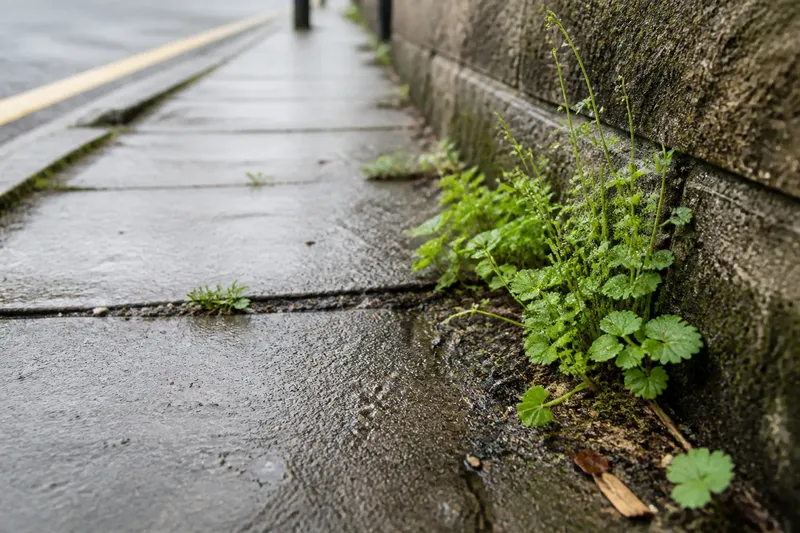
The common mistake with sidewalk weeds is to treat every pavement crack as the same kind of vacant pot. That can cost you the most useful clue: why one seam holds plants while the next stays bare. Follow the small differences in water, shade and disturbance, and an ordinary walk becomes a closer reading of the street.
Cracks as clues
A pavement slab sheds rain, but its edge may guide water towards a joint. A broken kerb can catch windblown soil; a wall foot can shelter seeds and hold dampness. These details make neighbouring cracks different places, even when they are only a few steps apart.
Seeds arrive by wind, water, animals, footwear or soil moved during routine work. A crack needs more than a seed, though. Fine material can give roots somewhere to take hold, while moisture helps growth begin. Drying, trampling, shade, sweeping and repairs may then alter what persists.
Keep the observation modest. Note what is visible rather than assigning a cause too quickly. A damp seam beside a downpipe is an observation; the claim that it stays damp all day is a guess unless you return and check.
Reading a street
Choose a public pavement you can revisit without entering private land or stepping into traffic. A phone camera, pocket notebook and rough sketch are enough. An identification app may help later, but start with the place rather than the plant name.
- Check whether a crack sits in sun or shade; if it is shaded, compare it with a nearby sunny seam, and if not, note the open exposure as a possible drying influence.
- Check for fine soil or debris in the joint; if material has collected, record it as possible rooting matter, and if the seam is clean, look for another explanation for any growth.
- Check where rainwater appears to run or collect; if a seam catches runoff, revisit after rain, and if water drains away, avoid assuming the crack remains moist.
- Check the surface for scuffs, fresh mortar, sweeping or cutting; if disturbance is visible, note the sign and compare later, and if none is visible, leave the cause of plant absence open.
- Check whether plants cluster near a verge, garden edge or patch of open soil; if similar growth occurs along that boundary, note a possible seed source, and if it does not, do not infer one from proximity alone.
- Check whether a neighbouring crack remains bare; if it does, compare shade, debris and disturbance before drawing a conclusion, and if it supports plants, record which conditions differ.
Say you choose a block with a shaded joint beneath a wall and a sunny kerb seam. Your starting notes say both are cracked, but only the wall joint contains fine debris. After rain, you see water collect there; on a later visit, seedlings are visible in that seam while the kerb remains bare. The result is a plausible explanation, not proof: shelter and collected material may have helped, while the kerb’s exposure may have made establishment harder. Another block could produce a different pattern.
Water and seed
Rain can carry tiny particles towards a lower edge, where they settle in a joint. A raised or exposed seam may dry sooner. The paving shape influences the route water takes; the weather affects what reaches it. A single wet patch tells you little about how long the moisture lasts.
Nearby gardens, verges, vacant plots and unmanaged soil can supply seeds, but a plant’s position does not identify its source. Look for repeated patterns instead: similar plants along one boundary, or growth concentrated where a seam meets open soil. Treat either pattern as a clue, not a verdict.
Disturbance and gaps
Maintenance may clear existing growth and expose soil; footfall can loosen material or press seeds into a crack. Building work can leave bare edges, while later sweeping or repair changes them again. Disturbance creates openings, but it can also remove plants already growing there.
Write down direct signs: fresh pale mortar, clipped stems, swept debris or a newly exposed edge. Do not turn those signs into a story about who acted or why unless you have direct evidence. This small distinction keeps the observation useful.
A bare patch is not automatically a failed habitat. It may lack rooting material, dry quickly, receive few seeds or be cleared before seedlings persist. Compare it with a nearby planted seam to see which visible conditions differ.
What do sidewalk weeds reveal?
Why do plants grow in pavement cracks?
Cracks can collect seeds, fine soil and moisture where an intact surface offers little room for roots. Whether a plant persists depends on local conditions, including exposure and disturbance.
Where do sidewalk weed seeds come from?
Wind, water, animals, footwear and moved soil can all carry seeds. A nearby garden or verge is one possibility, but location alone cannot confirm the source.
Why are some pavement cracks bare?
A bare seam may dry quickly, hold little rooting material, receive few seeds or be disturbed before seedlings establish. Compare its conditions with those of a planted crack rather than treating absence as a mystery with one answer.
Should you remove sidewalk weeds?
Leave plants in place during an observation walk, and do not collect them from public or private land without permission. If growth affects access or appears to cause a local problem, ask the responsible land manager.
Seasonal changes
Return to the same stretch in different weather. After rain, note where water runs or gathers; during a dry spell, see which plants remain visible; after maintenance, check whether growth has been cut, covered or left untouched. Keep the route consistent so that the changing conditions are easier to compare.
Flowering can make identification easier, but names may remain uncertain at other times. Photograph a plant without touching it, then consult a reputable local flora or knowledgeable local group. Avoid handling unfamiliar plants, especially if sap or spines may irritate skin.
Keep it simple
It is not worth scraping cracks for hidden soil, naming every seedling or photographing every joint. Those efforts disturb small plants and add little to what a careful look at the surface can tell you.
Record the date or weather, location, surface, water clues, disturbance and visible change. Use a common name only when you are confident; otherwise, a plain description is more accurate.
For sidewalk weeds, the useful comparison is often between two neighbouring seams, not between a plant and an ideal garden bed. Check what each crack catches, sheds or endures, and a bare patch can become as informative as a green one.